

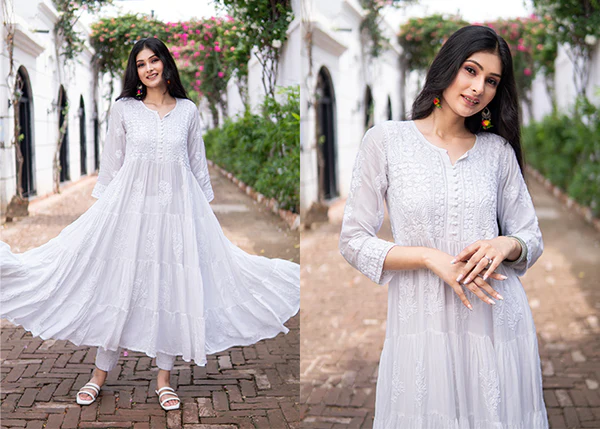
Chikankari embroidery is a traditional hand embroidery style which is originated in Lucknow, India, during the Mughal era. It is known for its fine needlework, delicate floral and paisley motifs, and use of white thread on white fabric. Chikankari embroidery has been a main part of Lucknow’s cultural heritage, but it declined in the 20th century due to some factors.
However, in recent years, chikankari embroidery has undergone a revival in Lucknow, and in this blog we will explore the factors that contributed to its resurgence.
Historical background of chikankari
Chikankari embroidery has a historical background in Lucknow, dating back to the Mughal era. The Mughals brought chikankari to Lucknow, and it quickly got popularity among the nobility and royalty. Chikankari embroidery was predominantly used to adorn traditional North Indian attire, such as flowing dupattas and kurtas, as well as household items, such as tablecloths, curtains, and napkins.
However, during the British colonial era, chikankari embroidery faced a complication as machine-made products from England replaced Indian handicrafts. Despite this, a few expert artisans continued to practice the craft and kept the art of chikankari embroidery alive, albeit it went largely unnoticed by the masses.
Factors that contributed to the revival of chikankari
Main factors that helped to the revival of chikankari
Chikankari embroidery has seen an extraordinary revival in recent years, owing to several factors. A remarkable contributor has been the growing fascination among customers for handmade and traditional crafts, resulting in an increased demand for authentic and distinctive products, including chikankari.
Furthermore, the Indian government has begun promoting handicrafts, including chikankari embroidery, by establishing several craft programs and organizations.
These initiatives provide artisans with learning opportunities and tools to promote their art work to reach a wider consumer base.
Designers and the fashion industry have also played a pivotal role in reviving chikankari embroidery by integrating it into their collections and showcasing its versatility and beauty. This exposure has helped raise awareness about embroidery and increase its admiration.
Finally, the social media has played a outstanding role in the resurgence of chikankari embroidery.
These factors have brought new opportunities for artisans to display their skills and sell their products. Nevertheless, some challenges must be addressed to ensure the continued success and growth of the chikankari industry.
Chikankari Today: Examples of its use in fashion and design
The art of Chikankari embroidery has developed significantly from its original form to its current state. Traditional white embroidery still holds cultural and aesthetic significance, but many contemporary designers have begun using this art form with bright colors and bold patterns to show the versatility of their work. Chikankari embroidery can now be seen on a variation of fabrics, opening up new markets for traditional craftspeople.
Lucknowi chikankari is the most widely acclaimed style of embroidery that uses popular chikankari motifs—including paisleys, flowers, and leaves in white thread on white fabric. The intricate work gives it a detailed and delicate finish.
Mukaish embroidery is another style of chikankari, in which twisted threads or small metal wires are inserted into the fabric to create intricate designs that give the embroidery a shimmering effect—perfect for formal wear.
Phulkari embroidery is a regional variation of chikankari embroidery start in Punjab. Bold floral designs characterize it in bright colors on a colored fabric. Phulkari embroidery is often used in bridal wear and symbolizes a woman’s marital status.
Chikankari embroidery has also been incorporated into lifestyle products and home decore. From cushion covers to tablecloths, chikankari embroidery can add a touch of sophistication and elegance to any room.
Challenges and Opportunities for chikankari artisans
The art of chikankari, in which intricate and stylish patterns are embroidered on textiles by hand, is facing challenges due to increased competition from machine-produced copies. Artisans have had to speed up their work—resulting in inferior imitations or lower quality design that do not reflect the true cultural heritage
However, chikankari artisans have benefited from the popularity of traditional and handmade chikankari crafts, which has increased interest in their embroidery. With the help of a government program that help supports works of craftsmen in rural areas, chikankari artists have been able to make their way to new markets.